· 5 min read
How to ask for customer reviews without sounding needy
In short:Ask right after a customer gets a real result, not on a recurring schedule, and send a three-sentence message with a direct link that requires no account, to everyone who had a real interaction, letting the ratings land where they land instead of pre-filtering happy customers.
Most founders put off asking for reviews because the ask itself feels awkward, even though the underlying task is simple. That hesitation is almost always about wording and timing rather than about whether customers are willing to help, because most people are genuinely happy to leave a quick review for a product that worked for them, as long as you catch them at the right moment and don't turn the request into a chore they have to schedule for later.
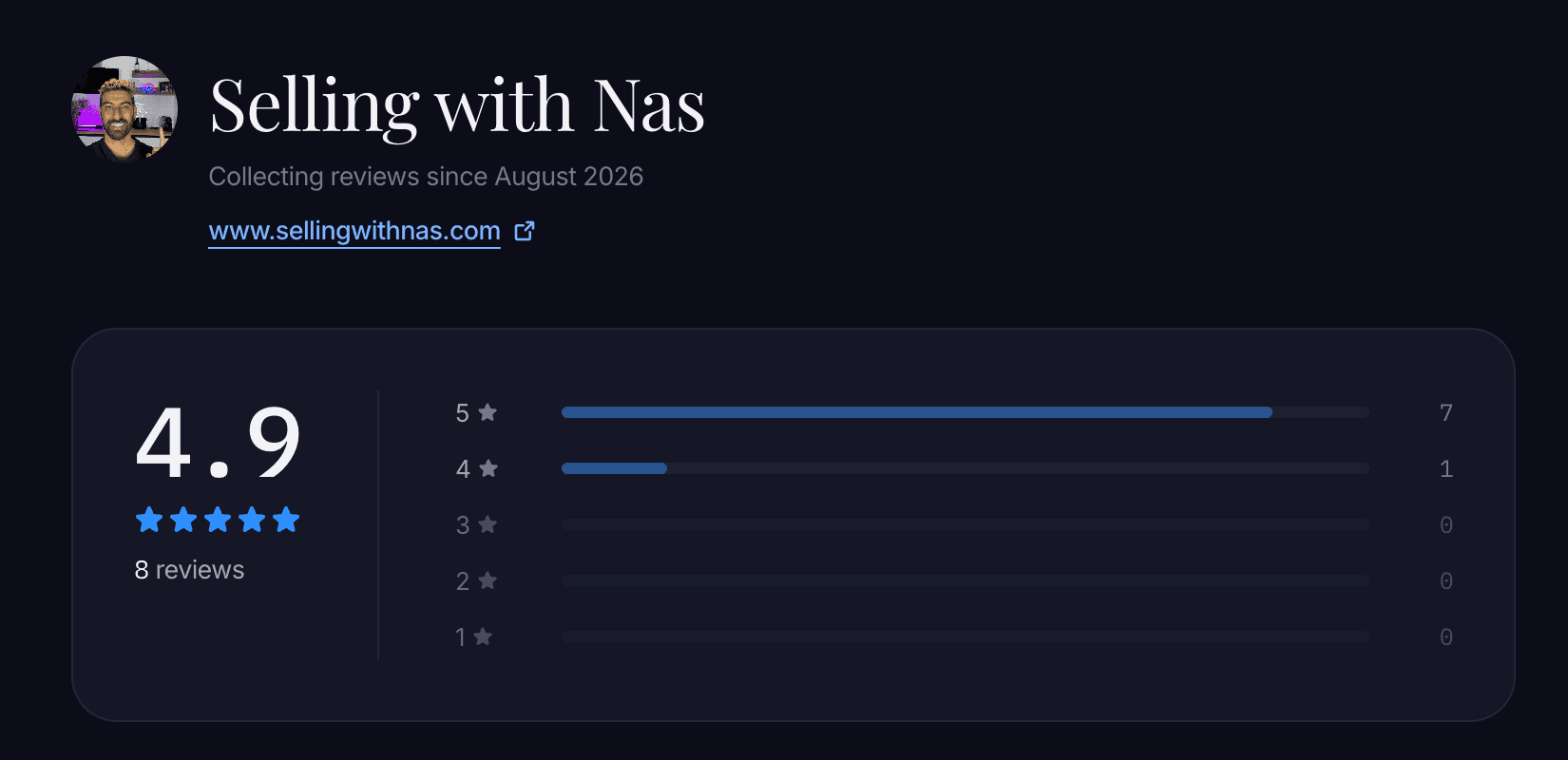
The image above is what that looks like once it's actually working: a real business collecting real ratings on its own reviews page, with a distribution you can see at a glance rather than a single number you have to take on faith.
Ask right after a win, not on a schedule
The best time to ask is immediately after a customer gets the outcome they were after, whether that's their first successful checkout, a support ticket that got resolved well, or a milestone they reached inside your product. That's the moment when the value is freshest in their mind, so the request feels connected to something real rather than arriving as an email that showed up simply because a month had passed on a calendar somewhere.
A weekly or monthly "please review us" blast to your whole list does the opposite of this. It arrives disconnected from any particular moment in a customer's experience, so it reads as a marketing task rather than a genuine ask, and it's easy for a recipient to ignore because there's no specific reason to act on it today rather than putting it off until next week, which usually means never.
Make the ask smaller than it feels
The instinct many founders have is to write a long, polite email explaining why reviews matter to a small business, complete with context about the company's mission and a note of appreciation in advance. Resist that instinct, because the longer the ask reads, the more it feels like a favour, and a favour is something people find easy to defer indefinitely when their inbox is already full. Say what you need, link to where they can do it, and stop there:
Hey [name], glad the [specific thing] worked out. If you have a minute, would you mind leaving a quick review? It really helps other people trust us: [link]
Three sentences do the whole job. There's no preamble about your company's mission, no "we'd be so grateful," and no explanation of what the star ratings mean, because a customer who has already used your product doesn't need any of that context. The specific detail you reference in the first sentence is what makes the message feel personal rather than templated, so it's worth swapping in a real detail every single time rather than reusing the same generic phrase for every customer.
Remove every piece of friction between the ask and the review
Every extra step that sits between a customer thinking "yes, I'll do that" and the review actually existing costs you a meaningful chunk of the people who intended to help. In practice, that friction usually comes down to three things worth checking on your own feedback link:
- No account required. Asking someone to create a login before they can tell you about their experience turns a two-minute favour into something closer to a ten-minute commitment, and most people will simply close the tab rather than register for yet another account.
- One link, not a form to fill in first. The link a customer receives should go straight to a page where they can type their review and submit it, rather than to a landing page that asks them to click through again before they even see the form.
- Works on a phone. Most of these links get opened from an email or a text message while someone is on their phone. If the form doesn't work cleanly on a small screen, you lose exactly the reviews that would otherwise have taken thirty seconds to write on a laptop.
Don't nudge the rating
It's tempting to pre-filter who gets asked: send the link to customers who already seem happy, and quietly route everyone else through a generic support channel instead, or show a handful of five-star examples on the page before the form to set expectations for what a "normal" review looks like. Both of these tactics push your average rating up artificially, and both are exactly the kind of thing customers eventually notice and mention, often in the very review you were hoping to shape. The FTC's own guidance on endorsements and reviews specifically warns against soliciting reviews only from customers likely to leave a good one, since doing so paints a biased and misleading picture of what customers actually think.
Send the same link to everyone who had a real interaction with your product, ask the same simple question every time, and let the ratings land wherever they land. A page with a 4.6 average and a couple of three-star reviews mixed in among the fives reads as considerably more credible than a wall of perfect scores, because it looks like what real, unfiltered feedback actually looks like to anyone who has read reviews before.
Then make the review count for something
A review that sits in an inbox or a spreadsheet only helps the one person who wrote it feel heard, which is a fine outcome but a fairly small one. Publishing it, whether on your pricing page, next to the feature it specifically mentions, or on the page a prospect lands on right before they decide whether to buy, is what turns the same ten minutes of someone's time into something that keeps working for you long after the conversation that prompted it is over. If you haven't set up a link to collect this kind of feedback yet, signing up takes about as long as reading this article.
Frequently asked questions
When is the best time to ask for a review?
Right after the customer gets a real result: their first successful checkout, a support ticket resolved well, or a milestone reached inside your product. The value is freshest in their mind at that point, which is why a one-off ask tied to a specific moment converts noticeably better than a recurring newsletter-style request sent to your whole list on a fixed schedule.
Should I ask every customer, or only my happiest ones?
Ask everyone who had a real interaction with your product, not just the customers who seem happiest at the time. Pre-filtering pushes your average rating up artificially, and customers tend to notice and mention that kind of selective outreach in the reviews they do eventually leave, which undermines the credibility you were trying to build in the first place.
Do customers need to create an account to leave a review?
They shouldn't have to, and on Quizzings they don't. Requiring an account before someone can leave a review turns a two-minute favour into something closer to a ten-minute one, and most people will close the tab rather than sign up for a service they have no other reason to join. A direct link to a page where they can type and submit immediately gets meaningfully more completed reviews.
What should a review request message actually say?
Three sentences: what happened, a direct ask, and a link. For example, "Hey [name], glad the [specific thing] worked out. If you have a minute, would you mind leaving a quick review? It really helps other people trust us: [link]." Skip the mission statement and the explanation of star ratings, since the specific detail you mention is what makes the message feel personal rather than templated.